

When a commercial property experiences damage from storms, water or fire, it often disrupts the company’s daily operations and makes the workplace a major safety hazard. Getting the damage repaired as quickly as possible is crucial to keeping production levels stable and avoiding issues that can interfere with customer satisfaction. All restoration projects start with a thorough inspection of the damage to choose the best repair methods.
Water Damage
Storms aren’t the only thing that can lead to water damage on a commercial property. Restoration specialists frequently receive service calls to address burst pipes, roof leaks and sprinkler malfunctions. After the initial inspection is completed, the technicians use advanced water extraction tools and industrial-grade air movers and dehumidifiers to remove as much moisture as possible from the floors, walls and ceilings. This process is essential to making sure the water damage doesn’t lead to mold growth and protecting the building’s structural integrity.
Fire Damage
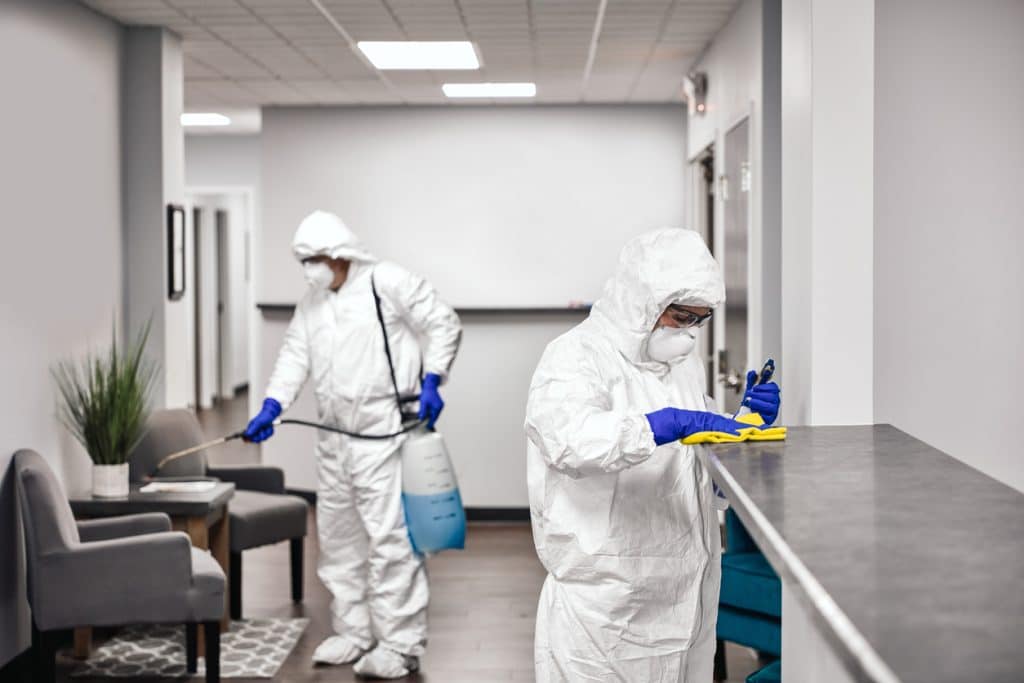
There’s a lot more that goes into restoring fire damage than simply repairing the burned materials. The process starts with soot and smoke removal using specialized cleaning solutions and HEPA vacuums. It also entails removing burned debris that isn’t salvageable. If the fire department extinguished the fire with water, the technicians extract and dry the affected areas to help limit secondary damage from mold growth and deterioration to the building’s structural stability. Containment barriers are often installed to keep employees and customers out of the damaged area while the restoration process takes place.
Mold Remediation
To restore damage caused by mold growth, the technicians must first identify and fix the source of the moisture problem, which could range from a plumbing leak to roof damage. After they stop the water intrusion, they’ll contain the affected areas using plastic barriers. Negative air pressure is used to prevent the mold spores from spreading to other parts of the building. If some of the affected materials, like wood framing or concrete, are salvageable, the technician will clean and treat them using antimicrobial products. If they’re not salvageable, they’ll be removed and disposed of according to local regulations.
Reconstruction Process
The reconstruction part of the restoration process only starts after the building has been cleaned, dried and declared safe. Many forms of property damage require replacing drywall, flooring, ceiling tiles, insulation and more. Restoration technicians will often follow a phased reconstruction process to help limit interference with the company’s normal operations.
Even though no two restoration projects are exactly the same, the goal is always to restore the property to its pre-loss condition as quickly as possible and in a way that causes minimal interruptions to business operations. Calling a professional restoration company as soon as the damage is discovered is the best way to reduce repair costs. When you need commercial restoration services in Fort Wayne, IN, contact Springfield Restoration.